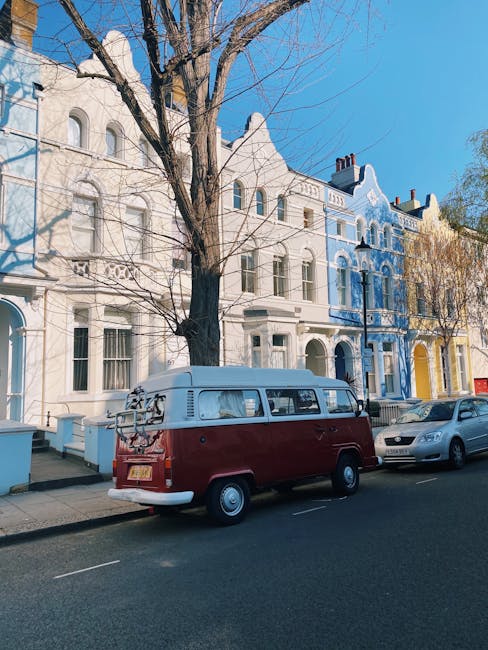
W11 moving checklist: Notting Hill streets, parking & van access
Moving in W11 can feel simple on paper and surprisingly fiddly on the day. The streets around Notting Hill look elegant, sure, but they can also be narrow, busy, permit-sensitive, and awkward for larger vans at exactly the wrong moment. If you are planning a flat move, sofa collection, or a full household relocation, a proper W11 moving checklist: Notting Hill streets, parking & van access can save you from delays, parking tickets, frustrated neighbours, and that slightly panicky feeling when the driver circles for the third time.
This guide walks you through the local realities: where access tends to be tight, how to think about parking, what to check before the van arrives, and how to make the job smoother without overcomplicating it. We will also cover practical risk points, useful planning tips, and the kind of small details that are easy to miss when you are juggling keys, boxes, and a deadline. To be fair, that is usually when the simple stuff gets forgotten.
If you are comparing moving help, it also helps to understand related services such as clear moving quotes and pricing, online booking, and the company's insurance and safety information. Those pages are useful reading before you lock in a slot.
Why W11 moving checklist: Notting Hill streets, parking & van access Matters
Notting Hill is one of those places where the environment itself shapes the move. Streets can be tight, parking can be controlled, and a van that looks perfectly manageable on a website can become a very different beast when it meets a terrace road with limited turning space. If your team arrives without a plan, a 20-minute job can quietly become a 90-minute shuffle of double-parking, carrying items further than expected, and trying not to annoy the whole street.
The W11 area includes a mix of mews, garden squares, mansion blocks, converted townhouses, and busier main roads. That variety is part of the charm, but it also means access is rarely one-size-fits-all. You may have a loading bay nearby, or you may not. You might be able to stop briefly outside the property, but only if traffic allows it. One street can be easy, the next one over can be a headache. That is the local reality, plain and simple.
Parking matters because it affects almost everything else: labour time, carrying distance, risk of damage, and the chance of being forced to split the move into awkward stages. Van access matters because a larger van is not always the smartest choice in W11. Sometimes a smaller vehicle, or a vehicle with better manoeuvrability, is the faster and safer option. If you are collecting bulky items such as mattresses or appliances, this becomes even more relevant.
There is also the neighbour factor. In a place like Notting Hill, one badly parked van can block bins, pinch the pavement, or create a bottleneck on a residential road. A good moving plan respects the street as well as the property. That sounds obvious, but it is exactly the sort of thing people forget when they are trying to leave by lunchtime.
How W11 moving checklist: Notting Hill streets, parking & van access Works
The practical process starts before moving day. First, you assess the property and the street layout. Is there room for a van to stop close by? Is the road narrow? Are there yellow lines, loading restrictions, residents-only bays, or timed controls? Are there any low bridges, height limits, or awkward corners near the address? These are the details that determine whether the move is smooth or mildly chaotic.
Next, you decide what kind of vehicle fits the job. A small van may be ideal for short urban moves, partial loads, or places where parking is limited. A larger van may be useful for volume, but only if access is sensible. In some cases, the best approach is not the biggest van, but the most practical one. Truth be told, many moving problems are really parking problems in disguise.
Then comes timing. Early morning can be calmer on some W11 streets, while later slots may be more difficult because of traffic, deliveries, or school runs. Midday can look good on paper and still be awkward if the road is busy. You want a time window that reduces stress rather than one that sounds convenient in theory.
Finally, think about the load itself. The easier the items are to handle, the faster the move. Break down furniture where possible. Keep boxes labelled. Make sure fragile items are not buried under random bags, a lamp, and the kettle. Small preparation, big payoff.
Key Benefits and Practical Advantages
A well-planned local move does more than reduce stress. It can save time, money, and a fair bit of back-and-forth. Here are the main advantages of planning for streets, parking, and van access properly in W11:
- Faster loading and unloading because the van is positioned sensibly.
- Lower risk of fines or complaints when parking is thought through in advance.
- Less carrying distance, which protects your belongings and your energy.
- Better protection for furniture and walls, especially on narrow stairwells and tight front entrances.
- More accurate timing, so your move is less likely to overrun.
- Improved coordination between the people loading, the driver, and anyone meeting you at the property.
There is also a quieter benefit: peace of mind. When the access plan is sorted, you stop second-guessing everything. You can actually focus on the move itself instead of wondering whether the van can fit past the parked cars outside the flat.
For bigger clear-outs, it can help to combine moving with responsible disposal. Items that are no longer needed can be dealt with through services such as recycling and sustainability options or specialist removals like mattress and sofa disposal. That way, you are not paying to move things you should have let go of weeks ago.
Who This Is For and When It Makes Sense
This checklist is useful for more people than you might think. It is not just for full house moves. In W11, access planning matters whenever you are moving anything bulky, awkward, valuable, or time-sensitive.
It makes particular sense if you are:
- moving into or out of a flat in Notting Hill;
- dealing with a narrow street or restricted parking;
- moving furniture from a top floor without a lift;
- coordinating a same-day collection and delivery;
- disposing of old appliances or heavy household items;
- trying to avoid disruption to neighbours or building management;
- working to a tight check-out or handover time.
It also helps landlords, letting agents, and property managers who need predictable timing. If you are arranging a move on someone else's behalf, access planning becomes even more important because everyone expects the job to run cleanly. And if it does not, well, people remember.
Step-by-Step Guidance
Below is a practical approach you can use before the van arrives. It is not fancy. It just works.
1. Walk the route from the property to the nearest stopping point
Do a real-life walk, not just a quick glance from the doorway. Check where a van could reasonably stop, where it would be unsafe, and whether there is a better pickup point around the corner. Look for obstacles like double parking, low hanging branches, tight bends, or a pavement that narrows unexpectedly.
2. Confirm parking controls and loading conditions
Look out for resident permit zones, pay-and-display bays, yellow lines, and short-stay loading areas. If you are unsure, do not assume the street is free to use. In London, that is how people end up paying for a lesson they did not want. If the move includes waste or bulky items, it is worth checking whether a standard van stopping arrangement is enough or whether a different disposal approach makes more sense. For general load planning, the guide on what can go in a skip can also be helpful when you are deciding what to keep, remove, or separate.
3. Match the van size to the street, not just the volume
People often think bigger is better. Sometimes it is not. A larger van can mean fewer trips, yes, but it can also be harder to park and less nimble on residential roads. If your address is awkward, a smaller van with efficient loading may actually be faster overall. It is one of those trade-offs that feels minor until the day itself.
4. Pack items in the right order
Put the heaviest and least fragile items where they are easiest to reach first. Keep essentials separate. Label each box clearly, especially if you need items at the destination in a hurry. A good system keeps the unloading process calm rather than turning it into a treasure hunt.
5. Protect the building as well as the furniture
Door frames, stair rails, and hall corners in older properties can be vulnerable. Padding, blankets, and careful handling are not optional extras. They are basic moving hygiene. If a building has a managed entrance or shared areas, that care becomes even more important.
6. Agree the timing window with everyone involved
If friends, family, or building staff are helping, make sure they know the exact plan. A few minutes' mismatch can cause real delays. People may arrive with good intentions and no shared sense of urgency. Happens all the time.
7. Keep a backup plan
Have one if parking is taken, if a road is temporarily blocked, or if access turns out to be tighter than expected. A backup plan might mean a second stopping point, a slightly later slot, or a smaller number of items on the first run. Flexibility is not a weakness; it is what keeps the day moving.
Expert Tips for Better Results
After a lot of local moving jobs, a few patterns come up again and again. The following tips are simple, but they save time in real-world conditions.
- Move the easy items first if parking is uncertain. That way you still make progress even if the van has to reposition.
- Keep a slim "access kit" ready: tape, marker, wipes, gloves, a torch, and a phone charger. You do not need much.
- Use the quiet moments on the street wisely. If the traffic gap opens, load efficiently. Do not wander back upstairs for a "quick extra thing" unless you really mean quick.
- Protect your time buffer. In W11, small delays happen. A delivery van, a neighbour reversing out, a temporary obstruction. It is just London.
- Take photos before and after if you are concerned about any access or damage issue. That can be very useful later.
Another good habit is to check whether any items need specialist handling before moving day. Fridges, appliances, and bulky pieces can require more care than people expect. If that applies, the company's fridge and appliance removal service can be a sensible option, especially if you want to avoid disconnecting or dragging an awkward item down a narrow staircase at the last minute.
And if you are clearing out sensitive paperwork while you move, do not just toss it in a box and hope for the best. The confidential shredding service is a tidy way to deal with documents properly.
Common Mistakes to Avoid
Most moving mistakes in W11 are not dramatic. They are small planning gaps that become big annoyances. Here are the usual suspects:
- Assuming a van can park outside without checking restrictions.
- Choosing a vehicle that is too large for the street.
- Forgetting about delivery windows or bin day, which can quietly ruin the access plan.
- Leaving packing until the van is due and then scrambling with loose items.
- Not telling building management or neighbours when shared access will be affected.
- Ignoring heavy-item handling until someone is already lifting it down the stairs.
One especially common mistake is underestimating how long loading takes when the van is not close to the entrance. A few extra metres does not sound like much. It becomes much more when you are carrying a chest of drawers and trying not to catch the corner on a wall. Not ideal.
If you are still comparing providers, look carefully at service transparency too. A clear pricing and quotes page, plus reliable payment and security information, helps you avoid surprises. Nobody enjoys hidden extras after a stressful move.
Tools, Resources and Recommendations
You do not need a mountain of equipment, but a few practical tools make the day easier:
- strong boxes in a few standard sizes;
- packing tape and a marker pen;
- protective blankets or covers for furniture;
- door protectors or cardboard for tight entrances;
- a trolley or sack truck for heavier items, where suitable;
- bin bags for quick sorting of loose debris and wrapping;
- a phone with maps and parking notes saved offline, just in case signal drops or your battery is sulking.
It also helps to keep a simple written note of the access details: exact address, nearest safe stopping point, instructions for gates or intercoms, and any time restrictions. That tiny bit of admin can prevent a surprising amount of confusion.
If you are moving a mixed load, the right waste handling matters too. Some items should not simply be mixed into ordinary rubbish, particularly anything hazardous or problematic. The guide on hazardous waste disposal is a useful reference for items that need extra care and a more responsible route.
Law, Compliance, Standards and Best Practice
For local moves in London, the practical side of compliance matters as much as the physical move. Parking restrictions, loading rules, and building access requirements vary by street and property. It is always safest to check the actual local conditions rather than rely on memory or a quick guess. Councils and property managers may have different expectations, and those can change over time.
From a best-practice point of view, the sensible approach is straightforward:
- do not block the highway or compromise pedestrian safety;
- respect time-limited loading zones and permit areas;
- communicate with residents or building staff where shared access is involved;
- handle goods and waste responsibly;
- make sure the mover has appropriate safety procedures and insurance in place.
That last point is worth a closer look. If a company handles your move, you want to know it takes safety seriously, both for people and property. Pages like health and safety policy and insurance and safety are exactly the sort of documents a careful customer should review. They do not make the move glamorous, obviously, but they do make it more trustworthy.
If you are disposing of large domestic items as part of the process, the same principle applies. Responsible disposal, safe lifting, and proper segregation of items all sit under good practice. Nobody wants a shortcut that turns into a mess later.
Options, Methods, or Comparison Table
There is more than one way to handle a W11 move. The best option depends on access, volume, and how much lifting you want to take on yourself. Here is a practical comparison.
| Option | Best for | Strengths | Trade-offs |
|---|---|---|---|
| Small van with close access | Flat moves, lighter loads, tight streets | Easier to manoeuvre, faster in narrow roads | May need more than one run for larger loads |
| Larger van with planned parking | Higher-volume moves with manageable street space | Fewer trips, efficient for bulkier furniture | Harder to park and position in constrained areas |
| Mixed approach | Trickier access, varied item sizes | Flexible, can adapt if the street gets busy | Needs better coordination and timing |
| Move plus disposal | House clear-outs, end-of-tenancy jobs | Combines logistics, avoids moving unwanted items | Requires item sorting and disposal planning |
In practice, the mixed approach is often the most realistic in W11. Streets vary too much for a rigid plan to be useful every time. A good mover will adapt, not pretend every road is the same.
Case Study or Real-World Example
Picture a move from a second-floor flat on a narrow Notting Hill street to another address a few miles away. The items include a bed frame, a sofa, several boxes, a fridge, and a small desk. On the first look, the street seems fine. But after a proper check, it becomes clear that parking outside the building is limited and turning space is tight because of parked cars on both sides.
Instead of forcing a large van into a bad spot, the plan changes. The team uses a smaller vehicle that can stop more safely, loads the bulky pieces first, and keeps a short list of items ready near the entrance. The fridge is handled separately with care, the sofa is protected with blankets, and the packing process is organised so the final box does not turn up hidden under coats and random cables.
The result? Less time spent shuffling vehicles, fewer complaints from neighbours, and a much calmer handover. Not perfect, because moves never are, but controlled. And control is what people usually want most on moving day.
This kind of job also highlights the value of planning around disposal, not just transport. If the sofa is not moving with you, a dedicated disposal route is usually more sensible than trying to improvise at the kerb. Likewise, if any items are being recycled or passed through a cleaner material stream, the recycling and sustainability approach can help keep the move tidy and responsible.
Practical Checklist
Use this list the day before, and again on the morning of the move. It keeps things grounded.
- Confirm the exact address and access point.
- Check parking restrictions for the street and nearby bays.
- Decide whether a smaller van is better than a larger one.
- Tell building staff, neighbours, or landlords if shared access may be affected.
- Set aside fragile, valuable, and essential items separately.
- Label all boxes clearly.
- Protect floors, corners, and door frames where needed.
- Prepare blankets, tape, torch, phone charger, and water.
- Make a note of any appliance, sofa, mattress, or special-item removal needs.
- Keep a backup plan if the planned parking space is unavailable.
Quick expert summary: in W11, the smartest move is usually the one that respects the street. The van should fit the access, not the other way around. Sort parking early, pack in order, and keep disposal separate from transport where that makes life easier. Small decisions, big difference.
Conclusion
Moving in Notting Hill does not have to feel like a battlefield with boxes. When you plan around the street layout, parking controls, and van access, the whole process becomes more manageable. You still have the normal moving-day chaos - a missing charger, a box marked "misc" that contains absolutely everything, someone asking where the kettle is - but the big preventable problems are under control.
The best W11 moves are the ones that respect the local setting. Narrow roads, selective parking, and awkward access are not obstacles to panic over; they are simply factors to plan for. Once you do that, everything else gets easier: loading, unloading, timing, and even the mood of the day.
If you are ready to turn the plan into action, it makes sense to compare your options, review the practical service pages, and book with confidence rather than guesswork.
Get a free quote today and see how much you can save.
And if you can, give yourself a little breathing room on moving day. A calm start in W11 often makes the whole rest of the day feel lighter.
Frequently Asked Questions
What should I check first for a move in W11?
Start with the street itself: parking restrictions, loading access, and whether a van can stop close to the entrance. That single check often determines the rest of the plan.
Is a larger van always better for Notting Hill moves?
No. In many W11 streets, a smaller or more manoeuvrable van is actually the better choice because it can access tighter roads and park more easily.
How far in advance should I plan parking?
As early as you can. For residential London moves, leaving parking planning until the day before is risky. A quick check well in advance gives you time to adjust the vehicle or timing if needed.
Do I need to tell neighbours or building management?
If the move affects shared entrances, stairs, or parking, yes, it is usually sensible to let them know. It reduces friction and helps avoid awkward surprises on the day.
What happens if the van cannot park right outside?
Then you may need a short carry from the nearest safe stopping point. That is where careful packing, good timing, and realistic expectations really help.
Can I move appliances and furniture together?
Yes, but only if the access plan and handling are suitable. Large appliances and bulky furniture often need extra care, so separate planning may be smarter.
What items are best removed before the move?
Anything you no longer need, especially bulky items or waste that would make the van load heavier. It is often cheaper and easier to remove them rather than move them twice.
What if I need to dispose of a sofa or mattress?
Use a service designed for that job. Items like sofas and mattresses are awkward to handle and should not just be left to chance at the kerb. A dedicated collection is cleaner and safer.
How do I know if my move needs specialist disposal?
If you have items such as fridges, appliances, confidential paperwork, or anything hazardous, specialist disposal is usually the better route. It keeps the move organised and reduces risk.
Is it worth using a mover that explains safety and insurance clearly?
Yes, absolutely. Clear safety and insurance information gives you confidence that your belongings and the property are being handled responsibly.
What is the biggest mistake people make with W11 street access?
The biggest mistake is assuming access will work itself out. In Notting Hill, it usually does not. A few minutes spent checking parking and van access can save a great deal of trouble later.
How can I make moving day less stressful overall?
Keep the access plan simple, label your boxes, separate essentials, and leave yourself a small buffer of time. That bit of breathing room matters more than people think.